Crimean Bridge Strike Severely Disrupts Russian Grain Exports, Experts Say
Damage to the Crimean Bridge has severely hindered maritime logistics in the Sea of Azov, blocking routes for Russian and stolen Ukrainian grain.
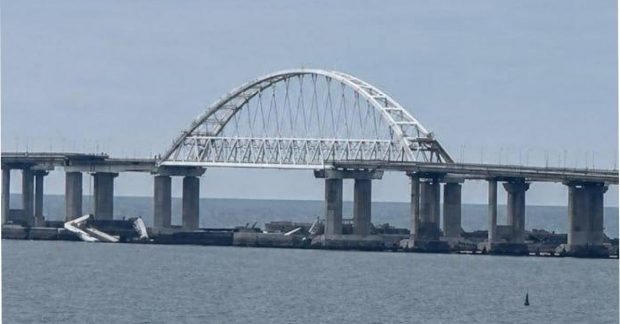 🏙️City
Photo: UNIAN
Key points
- The Crimean Bridge strike severely disrupted Russian grain exports in the Azov Sea.
- Azov ports previously accounted for 27% of Russia's regional grain shipments.
- Occupied ports in Mariupol and Berdyansk are no longer viable for grain logistics.
- Clearing the fairway will take months due to heavy operational and security challenges.
Logistical Roadblocks for the Aggressor
The overnight strike on the Crimean Bridge has dealt a heavy blow to the Russian Federation's export logistics in the Sea of Azov basin. Industry experts report that transporting agricultural commodities, including illegally acquired grain from occupied Ukrainian territories, has become significantly more complicated. During the previous season, shipments from this specific region accounted for nearly 27 percent of Russia's total grain exports, totaling around 14.7 million tons.
Full-scale navigation through the Kerch Strait had not fully recovered from earlier summer restrictions, and the latest infrastructure damage risks further derailing Moscow's plans. Specifically, the use of seized Ukrainian ports in Mariupol and Berdyansk for logistics has been effectively shut down. Additionally, with the winter navigation season approaching, numerous river-sea vessels face the prospect of remaining trapped inside the Sea of Azov for months.
Market Impacts and Alternative Routes
Clearing the fairway from bridge debris will require heavy floating machinery and considerable time, with operations conducted under constant security risks. While the aggressor considered alternative routes such as the small port of Ochamchire in breakaway Abkhazia, container shipping from there would drastically increase transportation costs and delivery times to Turkey and the Middle East. Such logistical bottlenecks weaken Russia's competitive standing in international agricultural markets.
«Russia used the occupied ports of Mariupol and Berdyansk to export stolen Ukrainian grain, but now this channel is closed», — industry analysts emphasize.
For residents of Shepetivka and the broader community, disruptions to the aggressor's economic lifelines carry symbolic and practical importance. Weakening Russia's export revenues directly undermines its financial capacity to sustain the ongoing war. Furthermore, reduced agricultural dumping on global markets helps stabilize the macroeconomic environment for Ukrainian producers. These infrastructure setbacks highlight the fragility of the supply chains supporting the occupation forces.
Source UNIAN — unian.ua/economics/agro/kerchenskiy-mist-urazili-sili-oboroni-ekspo… ↗
Read next
 🇺🇦Ukraine
US Intelligence Chief: Putin is no friend to America regarding Ukraine
Director of National Intelligence Jay Clayton clarified the US stance on Russia following Donald Trump's recent comments.
 🛡️Security
Aftermath of the Russian strike on Dymer: death toll rises to eight
Rescuers have recovered the body of the eighth victim from the rubble of a destroyed building in Dymer, Kyiv region.
 👥Society
Clashes at Kyiv Pechersk Lavra: Police Launch Investigation
Tensions escalated at the Kyiv Pechersk Lavra as individuals clashed over the use of religious buildings within the complex.
 🛡️Security
ISW analyzes humanitarian corridor prospects: why evacuation proposals differ
Analysts at the Institute for the Study of War explain the difference between evacuation proposals in the Kherson region and in Kostiantynivka.
 💼Economy
Another Attack on Novoshakhtinsk Refinery: Impact on Russian Fuel Sector
On the night of November 23, the Novoshakhtinsk oil refinery was hit again. The plant is a key fuel supplier for the Russian military.
 🚨Events
Special police operation launched in Kharkiv following fatal shooting
An evening shooting in Kharkiv has resulted in a fatality, with law enforcement currently searching for the perpetrators.