Cascading Crisis in Metallurgy Threatens Local Budgets and Ukraine's Economy
Falling production in Ukraine's mining and metals sector is triggering a chain reaction that leads to shrinking tax revenues, job losses, and financial difficulties in industrial cities.
 💼Economy
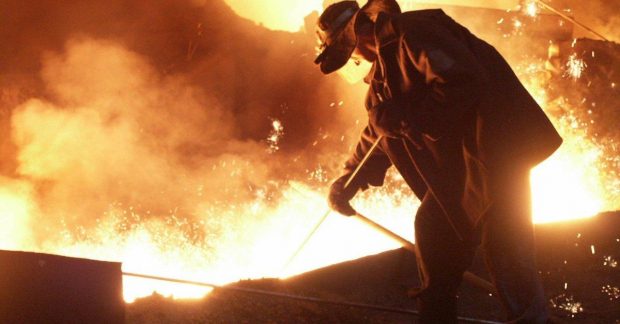
Photo: UNIAN
Key points
- Production decline in metallurgy affects budgets at all levels
- Industrial cities are forced to sequester budgets and freeze infrastructure projects
- The crisis affects related sectors: energy, logistics, and small business
- Stable energy supply and unblocked logistics are critical for preserving the economy
The systemic crisis in the Ukrainian metallurgical industry has ceased to be a local issue for individual enterprises, turning into a threat to the financial stability of both state and local budgets. Declining production volumes automatically entail reduced tax payments, job losses, and a drop in orders across related economic sectors.
Chain Reaction and Financial Consequences
According to analysts, key industry players are already reporting a significant decrease in financial contributions. Specifically, Metinvest reduced its overall tax payments over nine months, while VAT and corporate profit tax figures plummeted even faster. Similar trends are observed at other enterprises, such as the Dniprovsky Metallurgical Plant, while ArcelorMittal Kryvyi Rih expects a decline in performance due to production halts.
In 2025, the sector accounted for a significant share of Ukraine's GDP and foreign exchange earnings. However, due to a combination of negative factors—Russian shelling, logistical difficulties, port blockades, and electricity shortages—enterprises are losing their export potential. Every reduction in manufacturing capacity directly harms the energy sector, railway transport, engineering, and small businesses involved in supply chains.
Impact on City Budgets and Jobs
Regions with developed industry feel the consequences most acutely, as taxes from big business form the core of local treasuries. Municipalities are already forced to resort to budget sequestering, cutting expenditures on infrastructure, utilities, as well as the repair of roads, schools, and hospitals. Communities are also losing resources for co-financing international grants.
As Metinvest CEO Yuriy Ryzhenkov noted, the industry has reached a critical point: «We have reached a critical point. Metallurgists are losing the ability to produce and export steel, and the country risks losing jobs and billions of hryvnias in taxes». Staff reductions at enterprises lead to a drop in consumer purchasing power, which rebounds on the service and retail sectors.
Source UNIAN — unian.ua/society/kaskadniy-efekt-padinnya-virobnictva-u-metalurgiji… ↗
Read next
 🛡️Security
Zelenskyy states Ukraine is ready for four-way talks with Russia involving US and Europe
President Volodymyr Zelenskyy announced that Ukraine is ready for peace talks as early as tomorrow, while international partners aim to arrange a meeting before Christmas…
 🧠AI Analysis
Spanish village offers cheap housing for €100-200 a month with one strict rule
The municipality of Yanguas in Spain is renting out municipal homes cheaply to fight depopulation, but requires newcomers to have jobs lined up.
 🧠AI Analysis
Large-scale Ukrzaliznytsia Schedule Disruptions: Dozens of Trains Delayed by Up to Seven Hours
On Monday, November 23, several Ukrzaliznytsia passenger trains experienced significant delays due to security concerns and infrastructure issues. Some services are runni…
Ukrainian War Action Film 'Killhouse' Presented in Washington to US Lawmakers
Director Lubomyr Levytsky's feature about modern warfare and drone operations was screened in Washington for US congressmen, military officials, and diplomats.
 💡Tech
New Species of Flying Frog with Unusual Jelly-Nesting Behavior Discovered in Indonesia
Researchers in Indonesia's Sulawesi tropical forests have identified a new bright green flying frog species that uses gelatinous egg protection.
 🇺🇦Ukraine
Russian Government Allocates Funds for Kaliningrad Railway Ferries Amid Transit Concerns
The Russian government will direct over $573 million toward building two railway ferries to secure uninterrupted freight transport to the Kaliningrad exclave.