Wild Animals Unearth Massive 17th-Century Treasure in Czech Republic
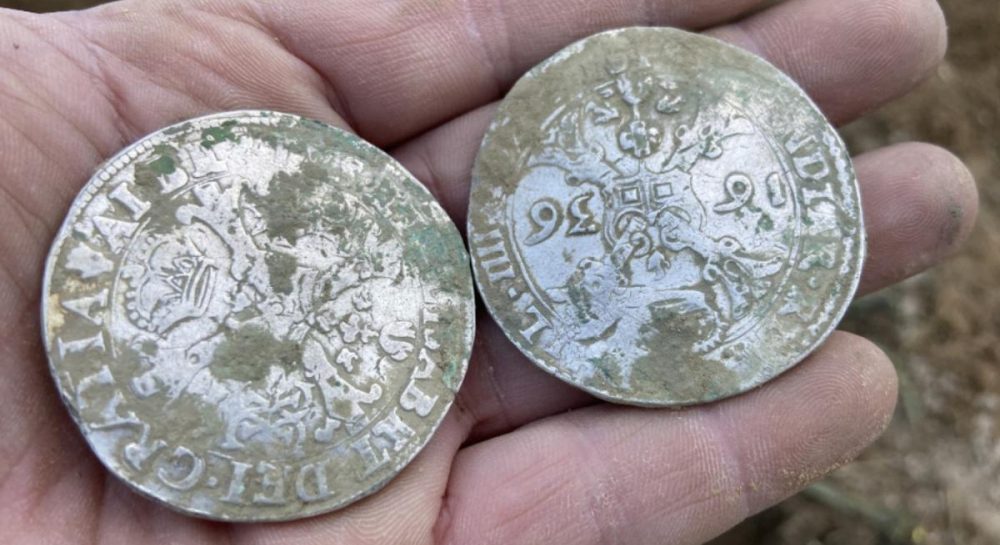
A collection of over 7,000 gold and silver coins was discovered in Moravia after wild animals disturbed the ground, revealing a hidden historical fortune.
 💼Economy
Photo: UNIAN
Key points
- Wild animals accidentally revealed a hoard of over 7,000 coins in Moravia.
- The treasure includes rare gold and silver coins from across Europe, dating up to 1671.
- The finder was officially rewarded with approximately $25,000 by the regional government.
An extraordinary discovery took place in a meadow in Moravia, Czech Republic, where wild animals inadvertently dug up part of a hidden treasure. The landowner, upon noticing the ancient coins on the surface, immediately contacted the local museum. This responsible action allowed professional archaeologists to conduct a full-scale excavation, uncovering one of the largest 17th-century coin hoards ever found in the historical territory of Moravia.
Discovery Details and Historical Context
Researchers found that the valuables were stored in two ceramic pots buried at a shallow depth of approximately 40 centimeters. To secure the cache, the owner had placed stones around and on top of the vessels. In total, experts documented 12 gold and 7,088 silver coins. The geographical diversity of the currency is remarkable: the gold pieces included ducats from the Netherlands, German states, the Polish city of Gdansk, and even Venice. The silver portion of the hoard featured coins from Austria, Bohemia, Saxony, Milan, Transylvania, and Switzerland.
The oldest items in the collection were Polish half-groschen from the 15th century, while the most recent were dated 1671. Based on this, historians conclude that the treasure could not have been hidden before that year. Numismatist Dagmar Grossmannova from the Moravian Museum suggests that the site likely served as a "personal safe" for the owner, who probably returned to the spot multiple times to add to their savings.
Economic Value and Reward
The cultural and historical value of the find has been estimated at over 14.1 million CZK, which is approximately 660,000 USD. At the time it was buried, the purchasing power of this wealth was immense—roughly 425 guilders. According to experts, this sum could have purchased about forty cows in the 17th century. Such wealth was unlikely to belong to an ordinary villager; it is more probable that the owner was a wealthy merchant or a family accumulating wealth over several generations.
Czech law provides incentives for those who help preserve historical heritage. The individual who discovered the coins and reported them to the authorities received a reward from the regional government amounting to 560,000 CZK (about 25,000 USD). This case serves as a prime example of successful cooperation between citizens and the state in preserving cultural treasures.
Source UNIAN — unian.ua/curiosities/skarb-iz-ponad-7-tisyach-monet-u-chehiji-yogo-… ↗
Read next
 💡Tech
US Company Successfully Tests Engine Core for New Supersonic Passenger Airliner
American aerospace firm Boom Supersonic has conducted the first hot-fire tests of the Sprint Core gas generator for its prospective Overture supersonic passenger jet, vie…
 🧠AI Analysis
Weather warning: cyclone with snow and black ice hits Ukraine
Forecasters predict a sharp change in weather across Ukraine due to a southern cyclone. Rains, wet snow, strong winds, and dangerous black ice on roads are expected.
 🚨Events
Large-Scale Fraudulent Call Center Network Dismantled in Khmelnytskyi Region
Law enforcement agencies shut down an underground network of call centers that scammed foreign nationals from residential apartments.
 🏛️Politics
DBR and SAP Scandal: Experts Point to Double Standards in High-Profile Investigations
The publication of recordings regarding alleged corruption involving the SAP head's circle has sparked a debate over institutional credibility.
 🛡️Security
Zelenskyy states Ukraine is ready for four-way talks with Russia involving US and Europe
President Volodymyr Zelenskyy announced that Ukraine is ready for peace talks as early as tomorrow, while international partners aim to arrange a meeting before Christmas…
 🧠AI Analysis
Spanish village offers cheap housing for €100-200 a month with one strict rule
The municipality of Yanguas in Spain is renting out municipal homes cheaply to fight depopulation, but requires newcomers to have jobs lined up.